


A septic tank is a key component of the septic system, a small-scale sewage treatment system common in areas with no connection to main sewage pipes provided by local governments or private corporations. A septic system is a highly efficient, self-contained, underground wastewater treatment system. Because septic systems treat and dispose of household wastewater onsite, they are often more economical than centralized sewer systems in rural areas where lot sizes are larger and houses are spaced widely apart. Septic systems are also simple in design, which make them generally less expensive to install and maintain. And by using natural processes to treat the wastewater onsite, usually in a homeowner’s backyard, septic systems don’t require the installation of miles of sewer lines, making them less disruptive to the environment. A septic system consists of two main parts-a septic tank and a drain field.

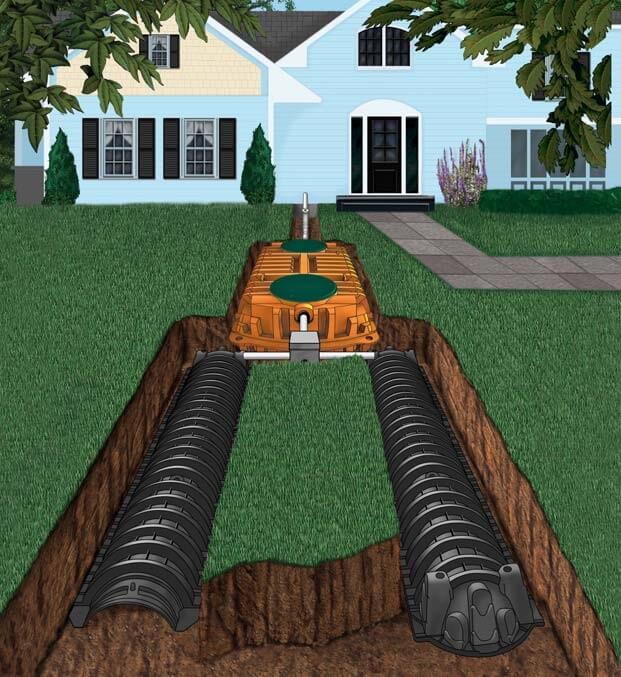
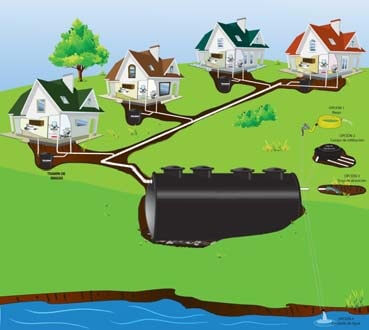 The layers of sludge and scum remain in the septic tank where bacteria found naturally in the wastewater work to break the solids down. The sludge and scum that cannot be broken down are retained in the tank until the tank is pumped. The layer of clarified liquid flows from the septic tank to the drain field or to a distribution device, which helps to uniformly distribute the wastewater in the drain field. A standard drain field (also known as a leach field, disposal field, or a soil absorption system) is a series of trenches or a bed lined with gravel or course sand and buried one to three feet below the ground surface. Perforated pipes or drain tiles run through the trenches to distribute the wastewater. The drain field treats the wastewater by allowing it to slowly trickle from the pipes out into the gravel and down through the soil. The gravel and soil act as biological filters.
